International Rice False Smut Consortium
|
Dear IRFSC colleagues and partners,
As we reflect on the past year, 2025 stands out as a defining period for the International Rice False Smut Consortium. Across continents, we observed an increase in both the visibility and impact of rice false smut, while at the same time strengthening our collective scientific response. Through shared surveillance, harmonized protocols, and open exchange of germplasm, isolates, and data, the consortium has continued to demonstrate the value of global collaboration in addressing complex and emerging plant health challenges.
|
The highlights that follow reflect the dedication of our partners, from field monitoring and outbreak documentation to controlled screening, pathogen biology, and advanced genetic discovery. Together, these efforts are laying the foundation for more coordinated resistance breeding, improved disease management, and predictive modeling in the years ahead. I want to thank all contributors for their commitment and collegial spirit, and I look forward to building this momentum as the consortium continues to grow.
On behalf of IRFSC,
|
Dr. Van Schepler-Luu
Scientist II - Plant Pathology and Host Plant Resistance, IRRI
Lead Convener, International Rice False Smut Consortium
V.ScheplerLuu@cgiar.org
|
|
|
Rice False Smut in 2025: A Global Snapshot
|
Over the past year, the International Rice False Smut Consortium (IRFSC) advanced its collective understanding of rice false smut through coordinated surveillance, field observations, controlled screening, and molecular research across Asia, Africa, and the Americas. Activities in 2025 reflected both the growing geographic spread of the disease and the consortium’s expanding capacity to respond through shared protocols, germplasm, and data.
|
The first annual meeting of the International Rice False Smut Consortium (IRFSC) in Hawaii, 2025
|
|
|
AFRICA: Early Warning Signals from Emerging Rice Systems
|
In East Africa, false smut was documented in Uganda between May and August across major rice-growing systems, according to Dr. Arthur Wasukira, NACRRI, Uganda. High disease incidence was observed in lowland varieties at the Doho Rice Scheme and in upland irrigated varieties at the Mobuku Irrigation Scheme. While pathogen characterization work has yet to begin, these observations underscore the need for early surveillance and diagnostic capacity in emerging rice production areas.
|
|
|
SOUTH ASIA: Intensifying Disease Pressure and Strategic Responses
|
Year-Round Incidence and Strategic Responses in Bangladesh
|
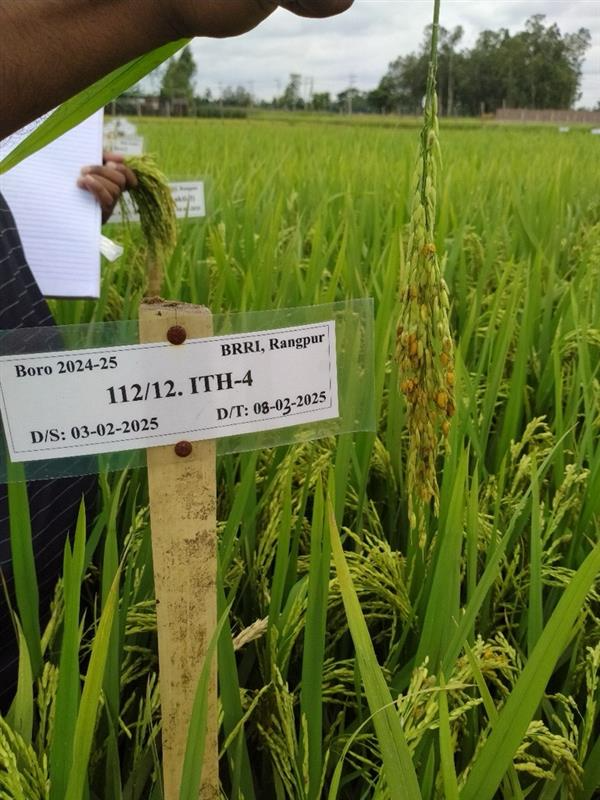
False smut pressure intensified across Bangladesh in 2025 according to scientists from Bangladesh Rice Research Institute (BRRI), with disease recorded throughout the year across all major rice seasons - Boro, Aus, and Aman. Incidence was documented in multiple regions, including Gazipur, Netrokona, Dinajpur, Rangpur, and Barishal, with particularly high infection levels noted in late-transplanted T. Aman crops. Field observations confirmed that delayed planting significantly increased susceptibility, with large commercial-scale farms affected.
|
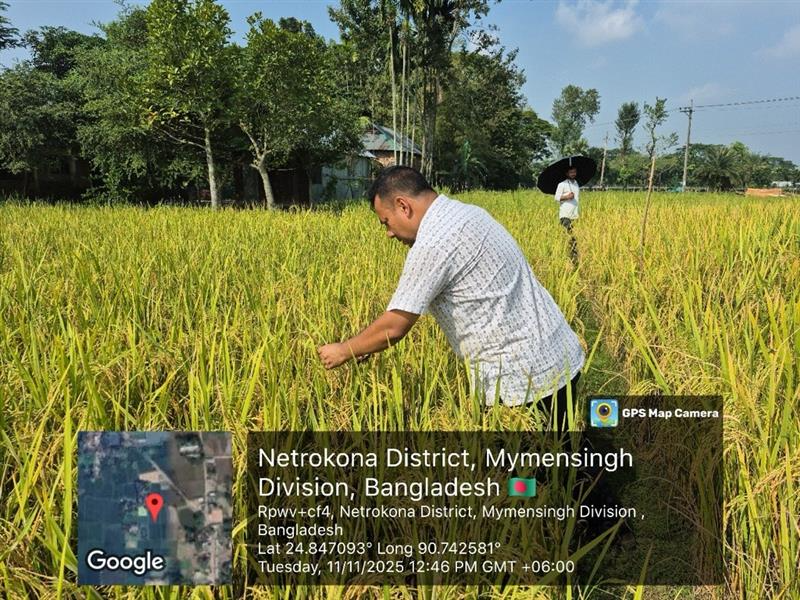
Dr Monsur Abul, BRRI, Bangladesh inspecting a rice field infected with RFS in Mymensignh
|
|
|
In parallel, controlled inoculation studies were conducted to validate disease response, and chemical management options were evaluated across six locations. Among the fungicides tested, a combination of tebuconazole and trifloxystrobin showed the strongest performance, followed by azoxystrobin combined with difenoconazole, according to Dr. Shireen Quazi.
Survey work also identified moderate to severe disease pressure in Rajshahi (near Sherpur), with milder but consistent infections observed in Muktagacha–Mymensingh and Rangpur. These findings reinforce the importance of integrated management strategies combining agronomy, host resistance, and targeted chemical use.
|
|
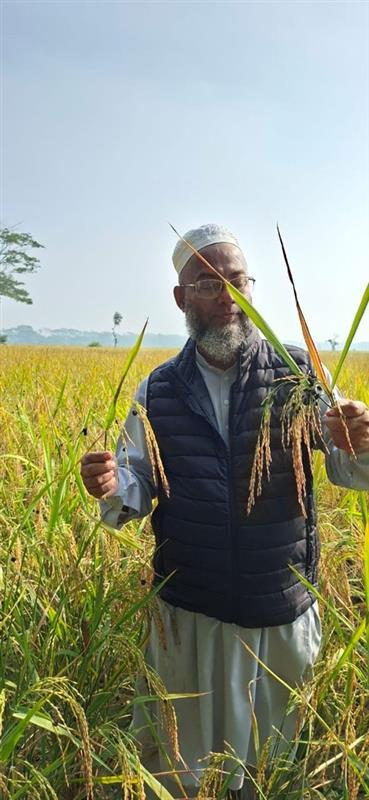
Dr Ashik Khan, BRRI, Bangladesh, collecting false smut-infected panicles.
|
|
|
Hotspots, Host Resistance, and High-Pressure Environments in India
|
|
|
Successful artificial inoculation of RFS produced in Bayer, by Dr. Deo Mishra.
|
False smut emerged as the predominant rice disease across large parts of northern India during Kharif 2025. Surveys conducted across Punjab, Haryana, Himachal Pradesh, and Jammu & Kashmir revealed severe and widespread infection, particularly in Punjab, where incidence reached 40–50% in popular varieties such as PR126, Pusa 44, and several hybrids. In contrast, cultivars such as PR131 and PR121 showed consistently lower disease levels according to Dr. Jagjeet Singh Lore, Dr. Harpreet Singh, PAU, Ludhiana. Extensive sample collection accompanied these surveys, with 40 field samples collected and over half successfully isolated and purified for further study.
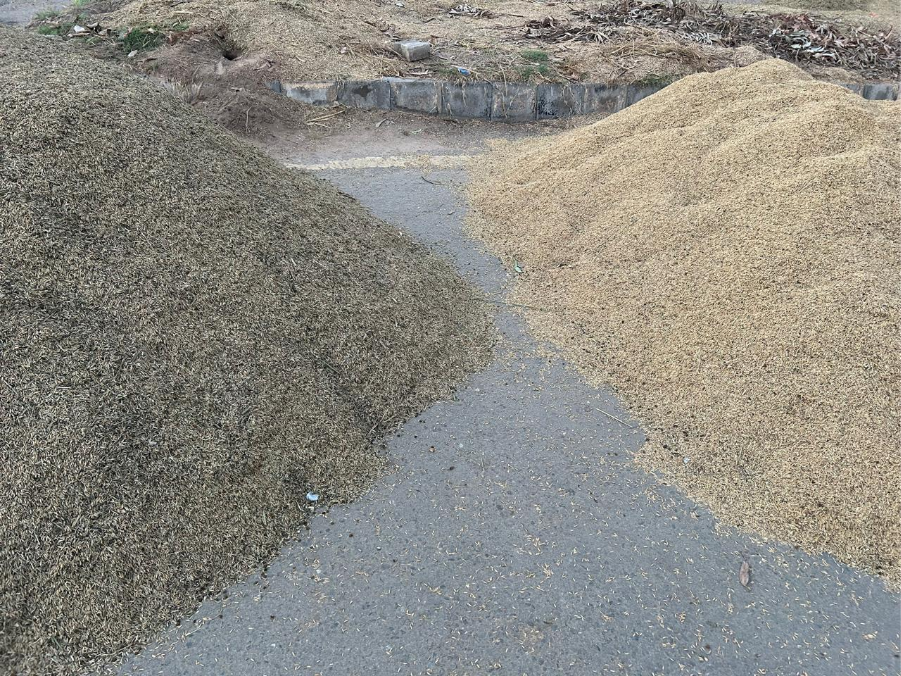
Additional surveys in southern India identified localized but severe outbreaks, including fields in Kampasagar, Nalgonda District (Telangana), where disease severity exceeded 50 percent and both harvested seed and straw showed heavy discoloration, according to Dr. Ladha Lakshmi, IIRR, Hyderabad.
|
|
|
Across India, a further 32 false smut samples were collected from diverse rice-growing regions to expand the national isolate collection. At hotspot locations, targeted donor identification trials screened 67 entries across staggered planting dates, identifying several resistant lines. Additional national trials further confirmed multiple resistant entries, while susceptible checks exhibited high disease scores.
Complementing field efforts, controlled-environment screening systems were established using syringe inoculation under greenhouse conditions, producing repeatable and reliable disease responses, according to Dr. Deo Mishra, Bayer Crop Science, Hyderbad, India. At ICAR–IIRR, sixteen promising entries received from PAU, Ludhiana (PAUFS 1–16) were artificially screened, with fourteen genotypes showing moderate resistance. Several lines recorded no more than two to three smut balls per inoculated panicle and will be re-evaluated during the 2025–26 Rabi season for confirmation. These systems are now being used to advance pipeline screening and support quantitative trait locus (QTL) mapping initiatives. In parallel, 187 entries from the global 3K rice panel were artificially screened, identifying approximately 31 lines with moderate disease reactions. These candidate entries will be validated under field conditions during Kharif 2026 to confirm stability of resistance as reported by Dr. Ladha Lakshmi, IIRR, Hyderabad.
|
|
|
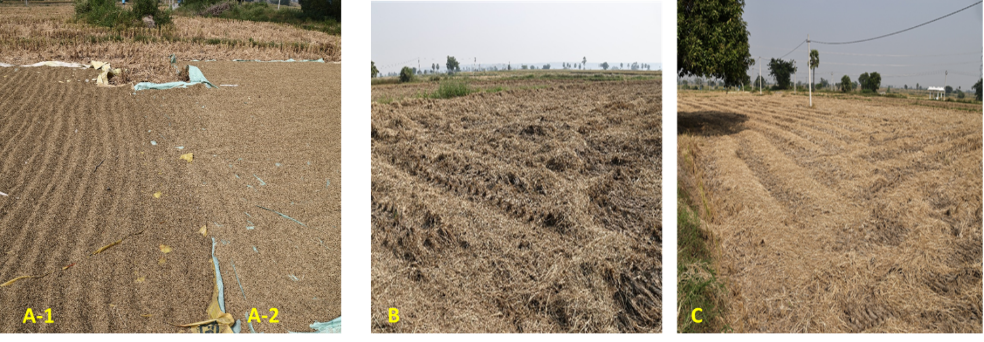
A discoloration of harvested rice seeds, collected by Dr Ladha:
|
(A-1) Seeds harvested from plants with severe occurrences of false smut.
(A-2) Seeds harvested from plants with low to moderate occurrences of false smut.
|
(B) Severe false smut-affected harvested paddy field observed with black-colored straw.
|
(C) Disease-free paddy field with no discoloration of the straw.
|
|
|
SOUTHEAST ASIA: Seasonal Shifts and the Search for Durable Resistance
|
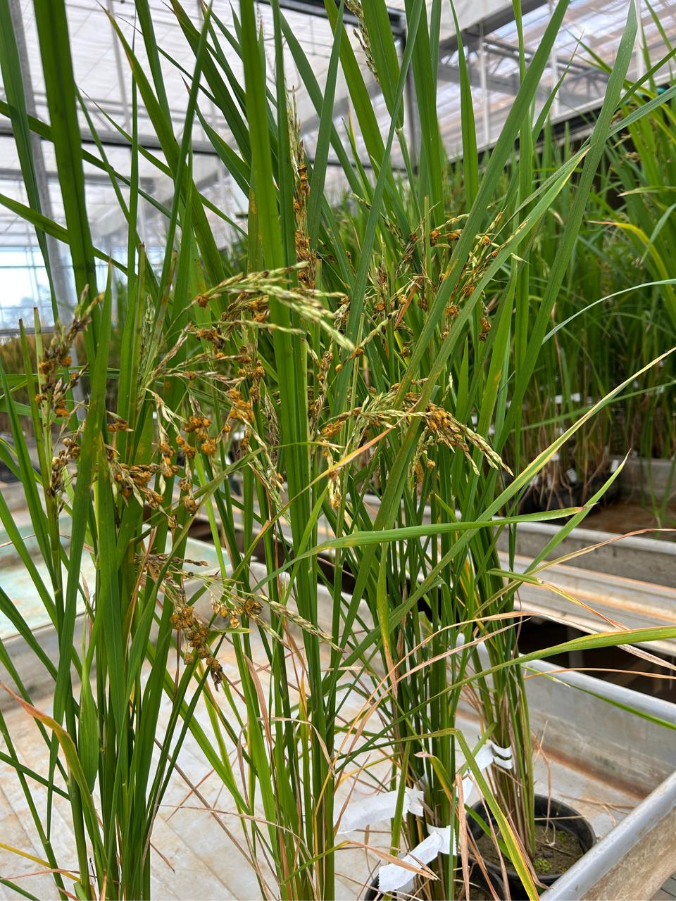
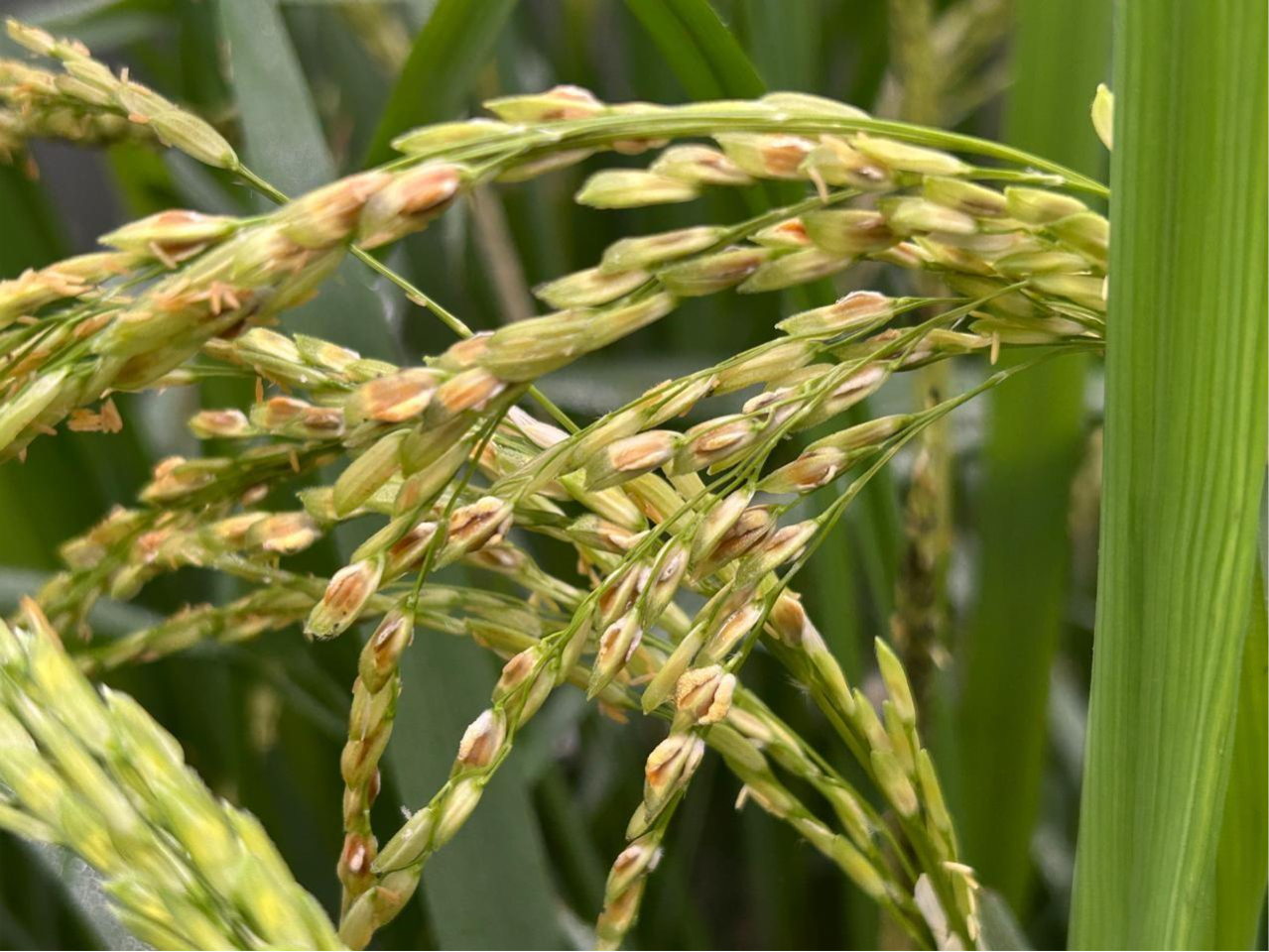
BC1F5 line showing early infection of RFS using artificial inoculation at IRRI greenhouse for QTL mapping.
|
At IRRI in the Philippines, rice false smut activities in 2025 conducted by the Plant Pathology and Host Plant Resistance Group spanned disease monitoring, isolate collection, and advanced resistance research. Seasonal surveillance revealed a marked contrast between dry and wet seasons. During the dry season, false smut incidence remained minimal, with only isolated infections observed. However, during the wet season, disease pressure increased substantially: nearly half of the 229 evaluated genotypes showed infection, with smut ball counts ranging widely among susceptible entries.
This intensified pressure enabled the collection of approximately 100 false smut samples from diverse genetic backgrounds. From these, 60 genetically uniform isolates were successfully purified and preserved using standardized long-term storage methods, ensuring their availability for future pathogenicity, molecular, and comparative studies within the consortium according to Dr. Jeanie Mary Yanoria.
|
|
|
Building on these resources, IRRI advanced multiple parallel research streams. Large mapping populations were screened under controlled greenhouse inoculation to generate robust resistance data independent of field variability. Reference-resistant genotypes were included to benchmark performance and validate screening protocols.
At the molecular level, candidate pathogen effectors were identified from genome and transcriptome datasets, with functional screening underway. Host transcriptomic analyses revealed differential regulation of nutrient transport pathways between resistant and susceptible varieties, guiding the development of gene-edited knockout lines. In parallel, prime-editing approaches targeting sugar transporters yielded promising resistance gains without agronomic penalties, highlighting new avenues for durable resistance reported by Ian Paul Navea.
|
|
|
THE AMERICAS: Tracking Pathogen Diversity Across Continents
|
In the United States, extensive sampling across the Texas rice belt resulted in the collection of more than 50 false smut–infected seed samples, most originating from the severe 2025 outbreak, reported by Dr Xin-Gen “Shane” Zhou, Texas A&M, USA. Over 30 pure isolates were established, and preliminary phylogenetic analyses indicated limited genetic diversity within individual fields. Ongoing work will expand isolate collection across broader environments and apply multi-locus sequence analyses to better understand pathogen population structure.
|
In Latin America, observations from Colombia confirmed that while certain research stations remain hotspots for other rice diseases, false smut occurrence can be sporadic and environment-dependent according to Dr. Gloria Maria Mosquera Cifuentes, (Alliance Bioversity-CIAT). No false smut was detected in key genotypes evaluated during the year, providing valuable contrast to high-pressure regions.
|
|
|
STRENGTHENING THE NETWORK: Consortium Milestones and the Road Ahead
|
A major milestone in 2025 was the first annual meeting of the International Rice False Smut Consortium, held on August 3 alongside Plant Health 2025 in Hawaii. The meeting brought together members in person and online to review progress, align priorities, and refine the consortium’s operational framework.
To reduce administrative barriers and encourage broader participation, the consortium agreed to remove formal membership fees. Participation is now open, with private-sector partners invited to contribute through voluntary donations or sponsorships. Updated guidelines, consolidated inoculation protocols, and refreshed lists of susceptible and resistant lines are now available to members, with material sharing underway under standard transfer agreements.
Looking ahead, the consortium will focus on protocol harmonization, multi-location testing of resistant donors, coordinated QTL mapping efforts, expanded pathogen sequencing across regions, and strengthened disease surveillance to support modeling and risk assessment. Hands-on training opportunities are also planned to build capacity among partners.
Together, these efforts reflect a growing, collaborative response to rice false smut—linking field realities with cutting-edge science to deliver practical solutions for rice-growing regions worldwide.
|
|
|
|
|
Thank you to everyone who contributed to the content of this newsletter.
|
|
|
International Rice Research Institute (IRRI)
|
Pili Drive, Municipality of Los Baños
Laguna, 4031, Philippines
www.irri.org
|
|
|
|